The price comes from the shop and can change. Check price, size and delivery on the shop's page before you order.
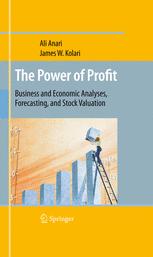
How can business leaders make better production and capital investment decisions? How can Wall Street analysts improve their predictions of future stock market values? How can government improve macroeconomic forecasts and policies? In The Power of Profit, Anari and Kolari demonstrate how profit measures can be applied as the basis for these and many other applications of economic, policy, financial, and business analysis. The underlying theme of the book is that profitability is the driving force in free market economies. Firms invest in capital, produce goods and services, and generate sales in an effort to reap profits. Firms that are unprofitable exit the marketplace and are replaced by profitable firms. Despite the crucial importance of profits, however, there is no formal model that directly relates profits to capital formation and output. Previous studies over the past 100 years on profit and the economy are mainly descriptive in nature, without any well-specified model grounded in microeconomic theory. Filling this gap, the authors present a profit system model of the firm grounded in basic accounting relationships in addition to the well-known Cobb-Douglas production function, which can be applied to individual firms, industries, and the business sector as a whole. Through rigorous data analysis, the authors show how the profit system modelcan be applied to: modeling the U.S. business sector and national economy forecasting output, capital stock, total profit, profit rates, and profit margins examining the relationships among profitability, economic growth, and the business cycle simulating the effects of potential monetary policy changes on the business sector and national economy valuing the Standard & Poor’s stock market index as well as individual firms. The result is a model that integrates microeconomic and macroeconomic factors and that can be widely applied in business and economic decisions, policymaking, research, and teaching.