
The price comes from the shop and can change. Check price, size and delivery on the shop's page before you order.
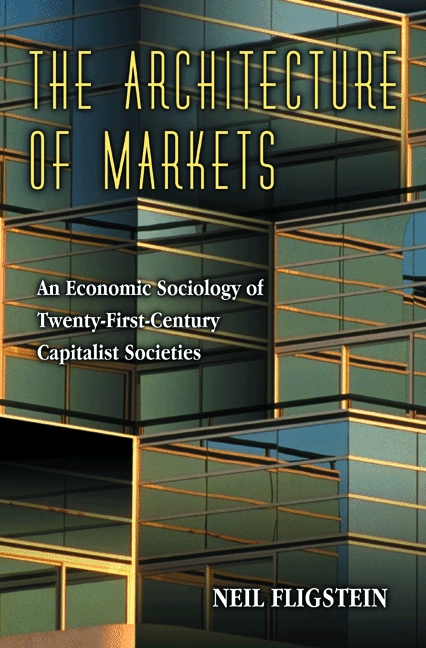
Market societies have created more wealth, and more opportunities for more people, than any other system of social organization in history. Yet we still have a rudimentary understanding of how markets themselves are social constructions that require extensive institutional support. This groundbreaking work seeks to fill this gap, to make sense of modern capitalism by developing a sociological theory of market institutions. Addressing the unruly dynamism that capitalism brings with it, leading sociologist Neil Fligstein argues that the basic drift of any one market and its actors, even allowing for competition, is toward stabilization. The Architecture of Markets represents a major and timely step beyond recent, largely empirical studies that oppose the neoclassical model of perfect competition but provide sparse theory toward a coherent economic sociology. Fligstein offers this theory. With it he interprets not just globalization and the information economy, but developments more specific to American capitalism in the past two decades–among them, the 1980s merger movement. He makes new inroads into the ‘’theory of fields,’’ which links the formation of markets and firms to the problems of stability. His political-cultural approach explains why governments remain crucial to markets and why so many national variations of capitalism endure. States help make stable markets possible by, for example, establishing the rule of law and adjudicating the class struggle. State-building and market-building go hand in hand. Fligstein shows that market actors depend mightily upon governments and the members of society for the social conditions that produce wealth. He demonstrates that systems favoring more social justice and redistribution can yield stable markets and economic growth as readily as less egalitarian systems. This book will surely join the classics on capitalism. Economists, sociologists, policymakers, and all those interested in what makes markets function as they do will read it for many years to come.