The price comes from the shop and can change. Check price, size and delivery on the shop's page before you order.
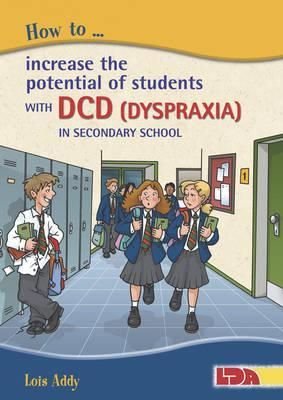
The structure of secondary education demands that young people are well-organised, self-sufficient, increasingly autonomous learners, who can cope with a wide range of teachers and a diverse timetable based around multiple locations and buildings. However, a substantial number of young people have motor co-ordination and perceptual difficulties which affect their participation in class activities. This condition was previously termed ‘dyspraxia’ but is now more universally referred to as ‘developmental coordination disorder’ or DCD. This book will provide readers with an insight into how DCD can affect students at Key Stages 3 and 4, and provide some practical strategies to help each young person to reach their potential. It is also intended to help parents/carers of young people with DCD to understand the potential help available to their child as they transition into secondary education. MORE ABOUT THE BOOK: For pupils with DCD, poor handwriting, erratic organisation, and difficulties with reading, mathematics and physical education may have been noted at primary school with their associated detrimental effect on academic success, peer relationships, social skills and self-confidence. However, these issues are felt more keenly in secondary school due to the desire to ‘fit-in’ and be accepted by a potentially large and often unforgiving peer group. This book is intended to inspire teachers and health care professionals to: understand the unique needs of young people with DCD; understand why young people with DCD have difficulties in perceptual and motor planning; appreciate the impact of DCD on learning; consider the added influence of peer-pressure and puberty on DCD; provide practical strategies to help; consider post-16 and vocational training. It is also intended to help parents/carers of young people with DCD to understand the potential help available to their child as they transition into secondary education.